
The bar for the corner office keeps rising.
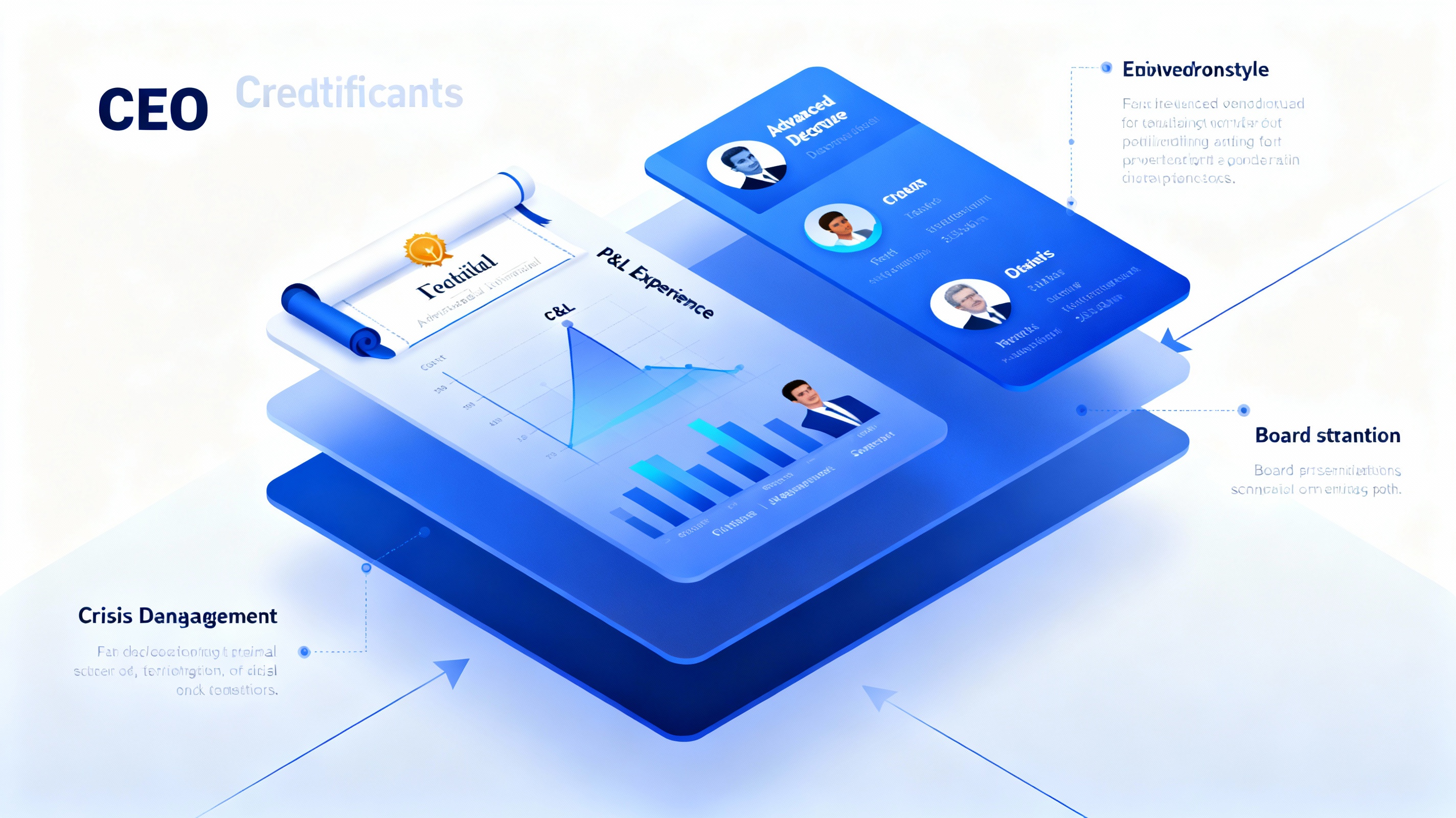
Globally, the share of CEOs with advanced degrees has increased from 58% in 2019 to 65% in 2025. This isn't credential inflation—it reflects the genuine complexity of leading modern enterprises through technological disruption, geopolitical uncertainty, and stakeholder capitalism.
Understanding how CEO credentials have evolved helps boards calibrate their succession criteria and helps aspiring executives chart their development paths.

The Education Premium
The data is clear: formal education correlates with CEO attainment:
Degree Distribution:
- 59% of CEOs hold bachelor's degrees as their highest credential
- 19% hold master's degrees
- 11% hold doctoral or professional degrees
Compensation Impact:
- CEOs with master's degrees earn $227,205 annually
- CEOs with bachelor's degrees earn $204,443
- The advanced degree premium is approximately 11%
Field of Study:
Most CEOs earned degrees in Business Administration, followed by STEM fields, particularly engineering. This dual emphasis on business acumen and technical literacy reflects modern CEO requirements.
Why Advanced Degrees Matter More Now
Several factors explain the rising education bar:
Technical Complexity
AI, cybersecurity, data analytics, and digital transformation require CEOs to engage meaningfully with technical leaders and decisions. While CEOs don't need to code, they need the analytical frameworks that advanced education provides.
Global Stakeholder Management
Modern CEOs navigate complex stakeholder ecosystems: investors demanding ESG performance, regulators imposing new requirements, employees expecting purpose-driven leadership, customers scrutinizing corporate behavior. Graduate education in business, law, or public policy provides frameworks for this complexity.
Credentialing in a Competitive Market
With more qualified candidates competing for fewer top roles, credentials serve as filtering mechanisms. Advanced degrees signal intellectual capability, commitment to development, and the discipline to complete rigorous programs.
Board Expectations
Board members themselves are increasingly credentialed. They expect CEO candidates to match their own educational backgrounds and analytical sophistication.
Beyond Degrees: The Experience Stack
Education is necessary but not sufficient. The modern CEO credential stack includes:
Prior CEO Experience (Paradox)
Here's a striking contradiction: while 40% of CEO candidates claim prior CEO experience, 69% of those actually hired have previously served as CEOs. Yet simultaneously, 85% of incoming CEOs in 2024 were first-time chief executives.
This suggests boards strongly prefer CEO experience when available, but supply constraints mean most hires are first-timers by necessity. The implication: prior CEO experience (even at smaller companies) is an enormous differentiator.
P&L Ownership
Over the past 20 years, 85% of S&P 500 CEOs came from four roles: CFO, COO, Divisional CEO, and leapfrog leaders. The common thread is profit-and-loss accountability. Functional specialists without P&L responsibility rarely reach the top role.
Board Exposure
CEOs increasingly need governance fluency from day one. Candidates who've served on external boards—or had extensive interaction with their own company's board—are better prepared for the CEO-board relationship.
Crisis Management
Experience navigating organizational crises—turnarounds, regulatory challenges, major incidents—demonstrates the resilience and judgment that CEO roles demand. Boards increasingly weight this experience in succession decisions.

The Internal vs. External Dynamic
67% of current CEOs were appointed internally, reflecting the value of institutional knowledge. But internal promotion creates credential challenges:
Internal Candidate Advantages:
- Deep understanding of company culture and operations
- Established relationships with key stakeholders
- Proven track record in the specific context
- Lower onboarding risk
Internal Candidate Gaps:
- May lack external board experience
- Limited perspective from single-company career
- Potentially constrained by organizational politics
- May not have experienced the full CEO scope elsewhere
Boards must honestly assess whether internal candidates have credential gaps that need addressing—through board assignments, executive education, or structured development—before promotion.
Industry Variations
Credential requirements vary significantly by sector:
Technology
Technical degrees (CS, engineering) are common, often combined with MBAs. Founder-CEOs may lack traditional credentials but compensate with demonstrated innovation and company-building track records.
Financial Services
Advanced degrees are nearly universal. MBA, JD, or quantitative graduate degrees are typical. Prior CEO experience at smaller institutions is highly valued.
Healthcare
MD or PhD backgrounds are common, particularly at pharmaceutical and biotech companies. Clinical credibility matters alongside business acumen.
Industrial
Engineering backgrounds dominate, often with operational leadership experience. MBA credentials supplement technical foundations.
Consumer
Marketing and brand-building backgrounds are more common. Consumer sector CEOs often have broader functional diversity than other industries.
The Age and Tenure Reality
Modern CEOs share demographic characteristics:
Age:
- The average CEO age is 51 years
- 89% of CEOs are 40 or older
- The path to CEO typically requires 20-25 years of career development
Tenure Considerations:
- CEO tenure has shortened in recent decades
- 2024 was a record year for CEO turnover, with 202 departures in the S&P 500
- Shorter tenures mean faster credential accumulation may be necessary
Implications for Succession Planning
For boards managing CEO succession:
Start Development Early
The credential stack takes decades to build. Identify CEO potential candidates in their 30s and 40s, not their 50s. Create development plans that address credential gaps systematically.
Create P&L Opportunities
Ensure high-potential leaders get profit-and-loss responsibility, even if it requires organizational restructuring to create appropriate roles.
Facilitate Board Exposure
Bring succession candidates to board meetings, assign them to board committees for specific projects, or support external board service.
Support Continued Education
Executive education programs, board governance certifications, and industry leadership opportunities help candidates build the full credential stack.
Implications for Aspiring CEOs
For executives targeting the corner office:
Audit Your Credential Stack
Honestly assess gaps in education, P&L experience, board exposure, and crisis management. Create a development plan to address them.
Consider an Advanced Degree
If you don't have one, evaluate whether executive MBA, specialized master's, or professional degrees would strengthen your candidacy.
Seek Smaller CEO Roles
Prior CEO experience is the strongest differentiator. Consider CEO roles at smaller companies, divisions, or portfolio companies as stepping stones.
Build External Visibility
Industry leadership, board service, and thought leadership create the external credibility that complements internal track records.
The credential bar is higher than ever. But for executives who systematically build the required stack, the path to the corner office remains navigable—and the role more impactful than ever.
---
Building CEO succession pipelines? [Contact GracePeak](/contact) to discuss how we help organizations develop leaders with the full credential stack for the corner office.