

The boardroom has an AI problem—and shareholders have noticed.
Shareholder proposals on AI more than quadrupled year-over-year in 2024, with investors demanding impact assessments addressing human rights, data privacy, and copyright concerns. Labor unions and faith-based investors have driven significant advocacy efforts, and the pressure is only intensifying.
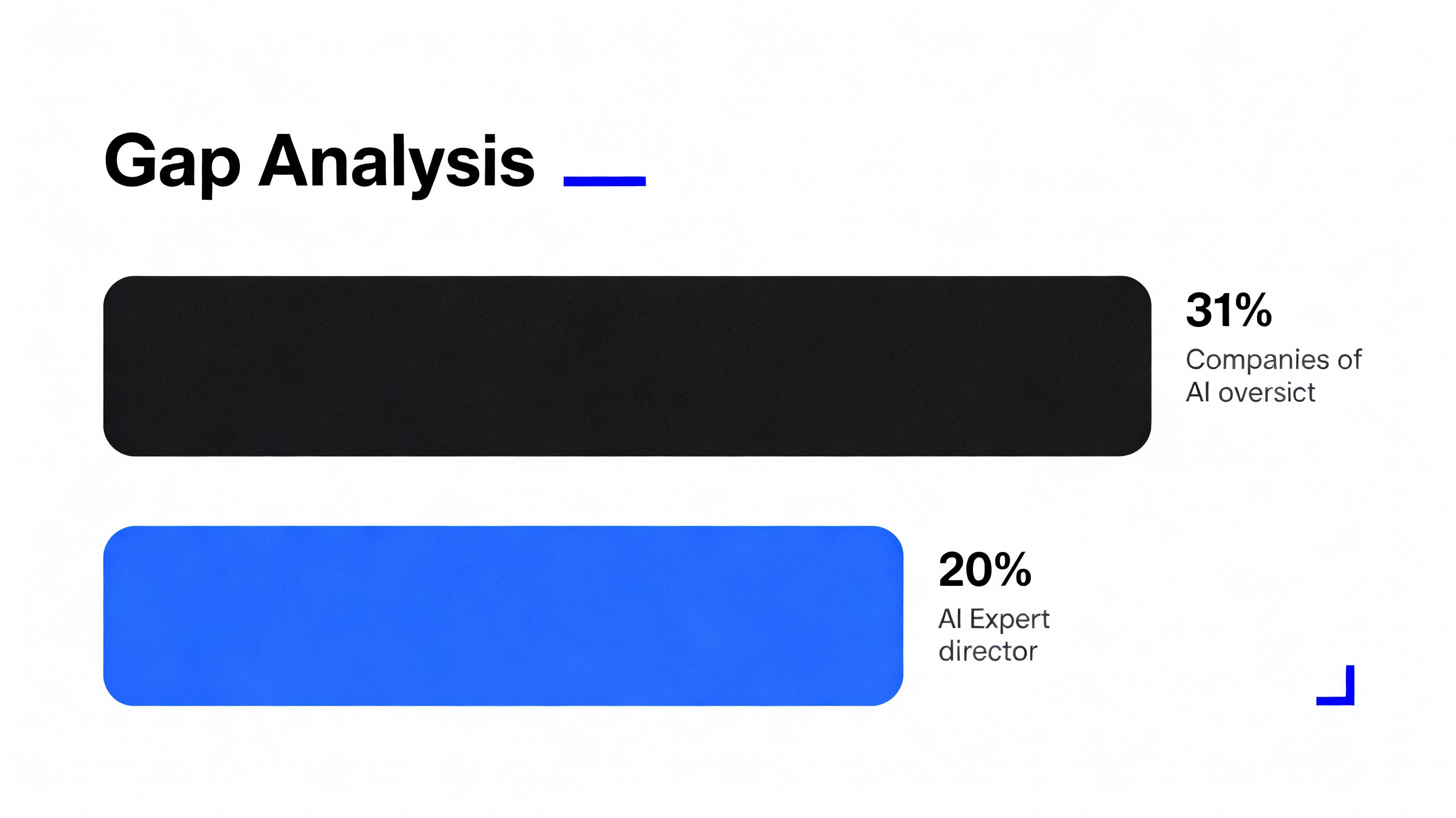
Yet most boards remain unprepared. While 31% of S&P 500 companies now disclose some level of AI board oversight—an 84% increase year-over-year—only 20% have at least one director with AI expertise. The gap between shareholder expectations and board capability is widening.
The Three Competencies Framework
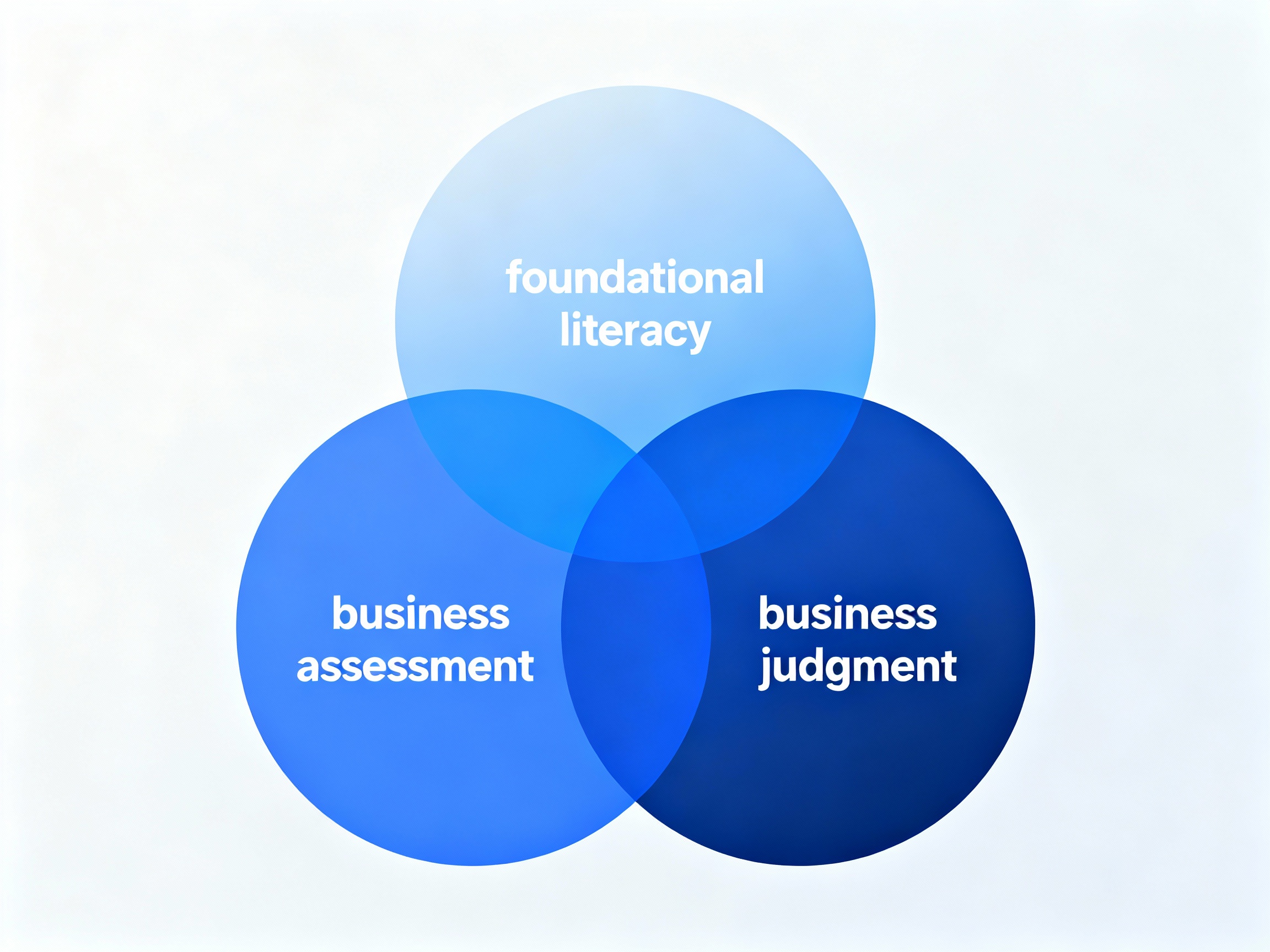
Not every board member needs to be an AI expert. But according to NACD research, every board needs three distinct AI competencies distributed across its membership:
1. Foundational AI Literacy
Directors should possess a basic understanding of how AI works—including machine learning, algorithms, and the difference between narrow AI applications and generative AI capabilities. This isn't technical depth; it's the vocabulary and conceptual framework needed to ask intelligent questions.
A director with foundational literacy can:
- Evaluate AI investment proposals beyond the hype
- Understand the difference between deterministic and probabilistic systems
- Recognize when management presentations oversimplify or overclaim
2. AI Business Assessment
This competency focuses on evaluating AI's impact on the business: identifying where AI is mission-critical versus experimental, assessing implementation risks, and understanding competitive implications.
Directors with this capability can:
- Determine which AI initiatives deserve strategic priority
- Implement appropriate monitoring and reporting systems
- Evaluate whether the organization's AI investments align with strategic objectives
3. AI Business Judgment
The most sophisticated competency involves using judgment when overseeing AI-related decisions for strategy, policy, investments, and risks. This requires synthesizing technical understanding with business context and governance experience.
Directors exercising this judgment can:
- Navigate trade-offs between innovation speed and risk management
- Evaluate ethical implications of AI deployment
- Assess management's AI strategy against competitive realities
Building Competency: Four Approaches
Boards that have successfully closed the AI gap typically combine multiple strategies:
Targeted Director Recruitment
The most direct approach is adding a director with AI expertise. The Information Technology sector leads here, with 37% of companies featuring directors with AI backgrounds. Consumer Discretionary and Financials sectors have roughly doubled their AI-competent director representation year-over-year.
When recruiting for AI expertise, boards should look for candidates who combine:
- Practical AI deployment experience (not just research or advisory)
- Business leadership in AI-intensive organizations
- Governance awareness and board-ready communication skills
AI Education Programs
For existing directors, structured education can build foundational competency efficiently. Options include:
- Executive education programs designed for non-technical leaders
- Industry group sessions focused on sector-specific AI applications
- Engagement with the company's own AI teams for internal education
The key is moving beyond conceptual overviews to practical understanding of how AI affects the specific business.
Expert Access
While not every director needs AI expertise, every board needs access to AI experts. Some approaches:
- Formal AI advisory relationships (separate from consulting engagements)
- Regular management presentations with technical depth
- External perspectives from AI researchers or practitioners
The goal is ensuring directors can get answers to questions management presentations don't address.
Committee Structure Evolution
How boards organize AI oversight is evolving rapidly. Full board oversight emerged as the top choice in 2024, departing from the prior pattern favoring audit or risk committees. Specialized committees now expand beyond traditional functions to include technology, innovation, and AI-specific mandates.
Only 2% of S&P 500 companies have established dedicated AI ethics boards—but this number is growing as ethical AI considerations become more prominent.
Sector Variations
AI competency requirements vary significantly by industry:
Technology (37% with AI-expert directors)
Tech boards face the highest bar. Directors must understand not just AI capabilities but competitive dynamics, talent markets, and technical debt implications.
Healthcare (35% with AI oversight disclosure)
Healthcare AI involves regulatory complexity (FDA approval for AI-based diagnostics), clinical validation requirements, and significant liability exposure. Boards need directors who understand both the technology and the healthcare context.
Financial Services (growing rapidly)
AI in financial services touches fraud detection, algorithmic trading, credit decisions, and customer service. Regulatory scrutiny is intense, and boards need competency in both AI capabilities and compliance requirements.
Consumer/Retail
AI applications in customer experience, supply chain, and personalization are increasingly strategic. Boards need directors who understand AI's revenue implications, not just operational efficiencies.
The Regulatory Dimension
The EU AI Act now mandates that organizations deploying AI systems ensure users have sufficient AI literacy. While this primarily affects operational staff, the governance implications are significant. Boards will increasingly need to oversee organizational AI literacy programs and ensure compliance with evolving regulations.
For multinational companies, this means board competency in understanding:
- Regulatory requirements across jurisdictions
- Risk classification of AI systems
- Documentation and transparency obligations
- Liability frameworks for AI-related harms
Questions for Board Self-Assessment
Boards evaluating their AI readiness should consider:
Coverage: Do we have at least one director with substantial AI expertise, and is that expertise active or dormant in our discussions?
Depth: Can our board evaluate AI investment proposals with appropriate skepticism, or do we rely entirely on management representations?
Governance: Is our committee structure aligned with AI's strategic importance, and do we have clear oversight accountability?
Information: Are we receiving adequate AI-related reporting from management, including both opportunities and risks?
Shareholder Expectations: Are we prepared to respond to shareholder proposals on AI, and have we assessed what disclosures we should make proactively?
The Competitive Imperative
The 84% year-over-year increase in AI oversight disclosure signals that boards are taking this seriously. But disclosure without competency is insufficient. Shareholders and regulators will increasingly distinguish between genuine AI governance and checkbox compliance.
For boards still building their AI capability, the window for proactive action is narrowing. Early movers will shape industry standards; laggards will find themselves explaining gaps to shareholders and regulators.
---
Assessing your board's AI readiness? [Contact GracePeak](/contact) to discuss how we help organizations build AI-competent boards through targeted director search and governance advisory.