
The math no longer works.
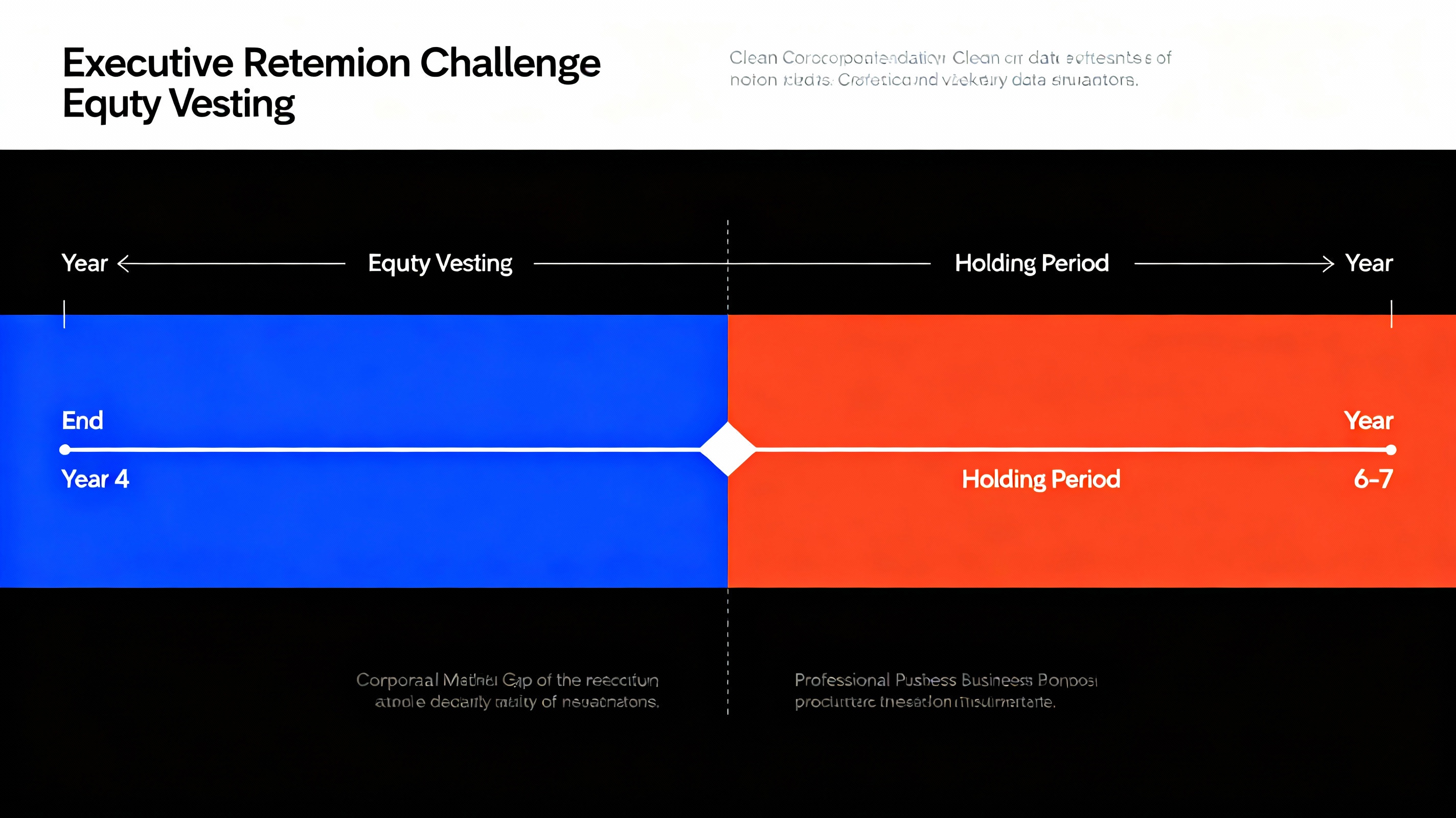
Extended holding periods have reached an average of 6.4 years in 2025, creating a fundamental misalignment between executive incentive structures and investment timelines. Standard 4-to-5-year equity vesting periods have come and gone, and many times there's still no near-term liquidity event.
The result: portfolio company executives continue to exit only to re-up in a new portfolio company, forcing PE investors to redesign incentive plans to align key talent with the full, extended lifecycle of the investment.
The Structural Problem
The traditional PE equity model was built for a different era:
Historical Model (4-5 Year Holds)
- Executive joins at acquisition
- Receives equity with 4-year vesting
- Company exits within investment horizon
- Executive realizes meaningful liquidity at exit
- Alignment maintained throughout hold period
Current Reality (6.4+ Year Holds)
- Executive joins at acquisition
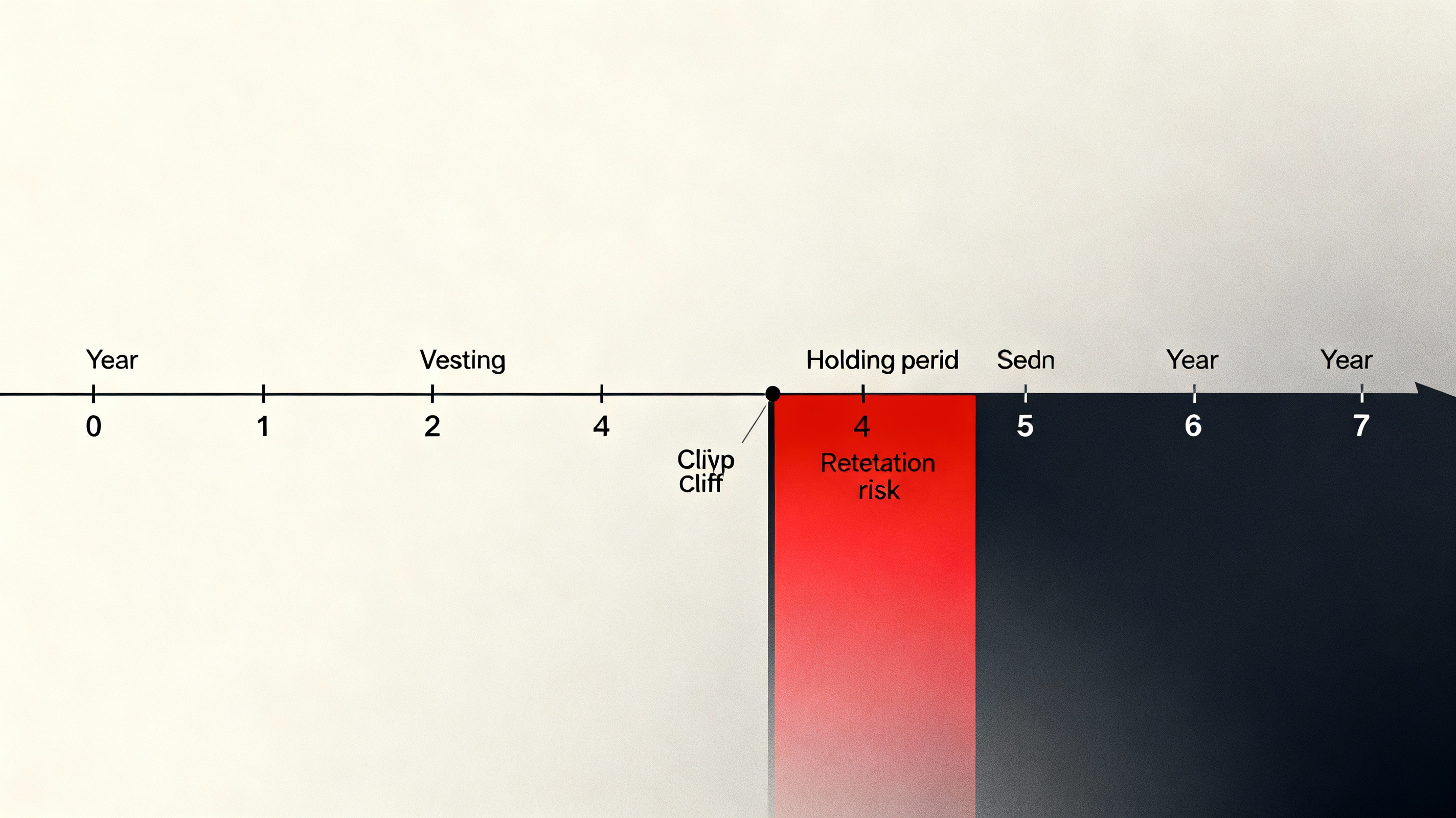
- Receives equity with 4-year vesting
- Vesting completes with no exit in sight
- Executive faces years of illiquid, uncertain value
- Retention incentive disappears
- Executive exits for new opportunity with fresh equity
The median hold period for exited private equity portfolio companies increased from approximately 5.5 years in 2019 to 7.0 years in 2023. With 30,000+ companies in the portfolio backlog and exit markets constrained, this trend shows no sign of reversing.
Why This Matters for Value Creation
Executive turnover at portfolio companies isn't just an HR problem—it's a value creation problem:
Institutional Knowledge Loss: Leaders who've driven transformation understand the company's unique operational levers, customer relationships, and cultural dynamics. Replacing them requires extensive ramp time.
Strategic Continuity Risk: Value creation plans depend on consistent leadership execution. Turnover forces strategy resets and delays initiatives.
Exit Preparation Disruption: Buyers evaluate management teams as part of due diligence. Leadership instability signals risk and can depress multiples.
Competitive Talent Market: The demand for C-suite and VP talent within portfolio companies remains intensely competitive due to supply shortages. Replacing departed executives costs more than retaining them.
How Leading Firms Are Responding
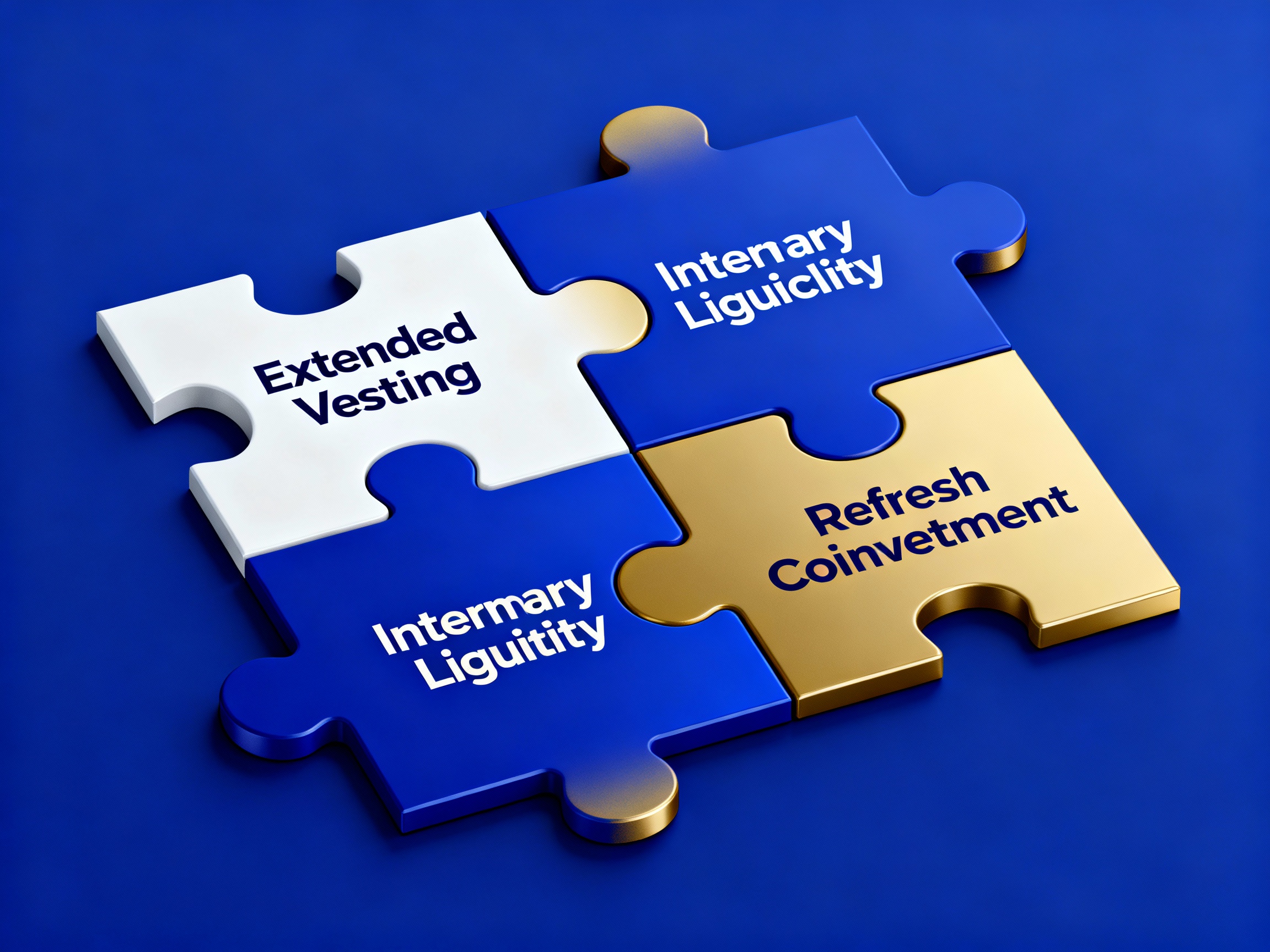
Sophisticated PE firms are redesigning incentive structures to address extended hold periods:
Extended Vesting Schedules
Rather than standard 4-year vesting, some firms now implement:
- 5-6 year vesting aligned with realistic hold expectations
- Back-loaded vesting that accelerates in later years
- Performance-based vesting tied to value creation milestones rather than time
The tradeoff: longer vesting can make initial recruitment more difficult, as candidates compare against shorter-term opportunities elsewhere.
Interim Liquidity Programs
Some firms create liquidity opportunities before exit:
- Secondary sales allowing executives to sell portions of vested equity
- Dividend recapitalizations that provide cash returns to equity holders
- Synthetic liquidity programs that advance value against anticipated exit
These programs balance retention with the reality that executives have personal financial needs that can't wait for uncertain exit timing.
Refresh Grants
When initial equity grants fully vest with no exit in sight, firms issue refresh grants:
- New equity awards that restart the retention clock
- Often tied to next-phase value creation targets
- May include catch-up provisions for executives who stayed through the initial vesting period
The key is timing refresh grants before executives begin exploring alternatives—proactive retention rather than reactive counter-offers.
Value Creation Bonuses
Annual or milestone-based cash bonuses tied to operational improvements:
- EBITDA growth targets
- Revenue milestones
- Margin improvement
- Strategic initiative completion
Cash compensation provides near-term rewards while equity remains the long-term alignment mechanism.
Co-Investment Opportunities
Allowing executives to invest personal capital alongside the PE firm:
- Creates additional ownership and alignment
- Provides potential for meaningful wealth creation
- Signals commitment to the investment thesis
Co-investment works best for executives with sufficient personal capital and risk tolerance.
The Competitive Dynamic
Portfolio companies don't compete only with each other for talent—they compete with the entire market:
Public Company Comparison
Public companies offer:
- Liquid equity that can be sold at any time
- Clear market valuation of compensation
- More predictable career trajectories
- Often lower travel and intensity requirements
PE must differentiate through equity upside potential, leadership scope, and career acceleration that public companies can't match.
Other PE Opportunities
Executives who've completed one PE cycle are attractive to other sponsors:
- Proven ability to operate in PE environments
- Understanding of value creation levers
- Comfort with board dynamics and investor relationships
The irony: successful PE executives become more likely to leave for fresh opportunities with new PE sponsors.
Corporate Development Roles
Strategic acquirers often recruit PE-backed executives who:
- Understand M&A processes from the target side
- Have experience with operational transformation
- Bring PE discipline to corporate environments
Retention Beyond Compensation
While incentive structure matters, retention involves more than money:
Career Development
- Clear progression paths within the PE ecosystem
- Opportunities to take on larger portfolio company roles
- Potential to move into operating partner positions
- Board experience and governance exposure
Mission and Impact
- Meaningful ownership and decision-making authority
- Visible impact on company trajectory
- Building something rather than maintaining
- Entrepreneurial environment within professional structure
Relationship Quality
- Sponsor behavior during challenging periods
- Board dynamics and director support
- Operating partner collaboration
- Recognition and communication
Executives who feel valued, supported, and invested in stay longer than those who feel like interchangeable assets—regardless of equity structure.
Questions for PE Firms
Sponsors evaluating their retention strategies should consider:
Incentive Design:
- Do our vesting schedules align with realistic hold period expectations?
- Have we modeled executive economics at various exit scenarios and timelines?
- Are we competitive with alternative opportunities our executives face?
Proactive Management:
- Do we track executive sentiment and retention risk systematically?
- Are we refreshing equity before executives begin exploring alternatives?
- Do we have clear processes for addressing retention concerns?
Portfolio-Wide View:
- Are we learning from retention successes and failures across portfolio companies?
- Do we share best practices for executive retention across our operating team?
- Are we building reputation as a sponsor where executives want to work?
The Path Forward
Extended hold periods are likely structural, not cyclical. With a backlog of 30,000+ companies and slow exit activity, PE firms must adapt their talent strategies accordingly.
The firms that get this right—designing incentive structures that align executives with extended timelines while providing meaningful interim rewards—will maintain leadership continuity that compounds into value creation. Those that don't will face a revolving door of executive talent, with all the strategic disruption and search costs that implies.
For executives evaluating PE opportunities, understanding incentive structure and sponsor track record on retention has never been more important. The difference between a sponsor who supports executives through extended holds and one who doesn't can mean years of career impact and significant wealth differential.
---
Designing executive incentive programs for extended hold periods? [Contact GracePeak](/contact) to discuss how we help PE firms build retention strategies that align talent with value creation timelines.