

The operating partner was once a nice-to-have—an experienced executive brought in occasionally to advise struggling portfolio companies. Today, it's the cornerstone of PE value creation strategy.
With 82% of Operating Partners reporting involvement throughout the entire lifecycle of an investment, this role has evolved from post-acquisition troubleshooter to pre-deal strategist, operational architect, and exit catalyst. As PE firms invest in sophisticated, data-driven value creation processes, Operating Partners have become indispensable.
The Market Divergence
An interesting split has emerged in how different PE segments approach operational expertise:
Mid-Market Strategy: Doubling Down
Mid-market firms are doubling down on operating partners to drive value through hands-on changes. With deal sizes that don't support massive corporate overhead, these firms rely on operating partners to:
- Lead transformation initiatives directly
- Serve as interim executives during transitions
- Build operational playbooks that can be deployed across portfolio companies
- Mentor and develop portfolio company leadership teams
For mid-market PE, the operating partner isn't advisory—it's operational.
Large-Cap Strategy: Financial Engineering Persists
Large-cap firms have shifted toward financial engineering over operational improvements, relying on scale, market position, and sophisticated capital structures. Operating partners at these firms often focus on strategic initiatives rather than day-to-day operational involvement.
This divergence creates different talent profiles for operating partners depending on the PE firm's strategy and fund size.
What Operating Partners Actually Do Now
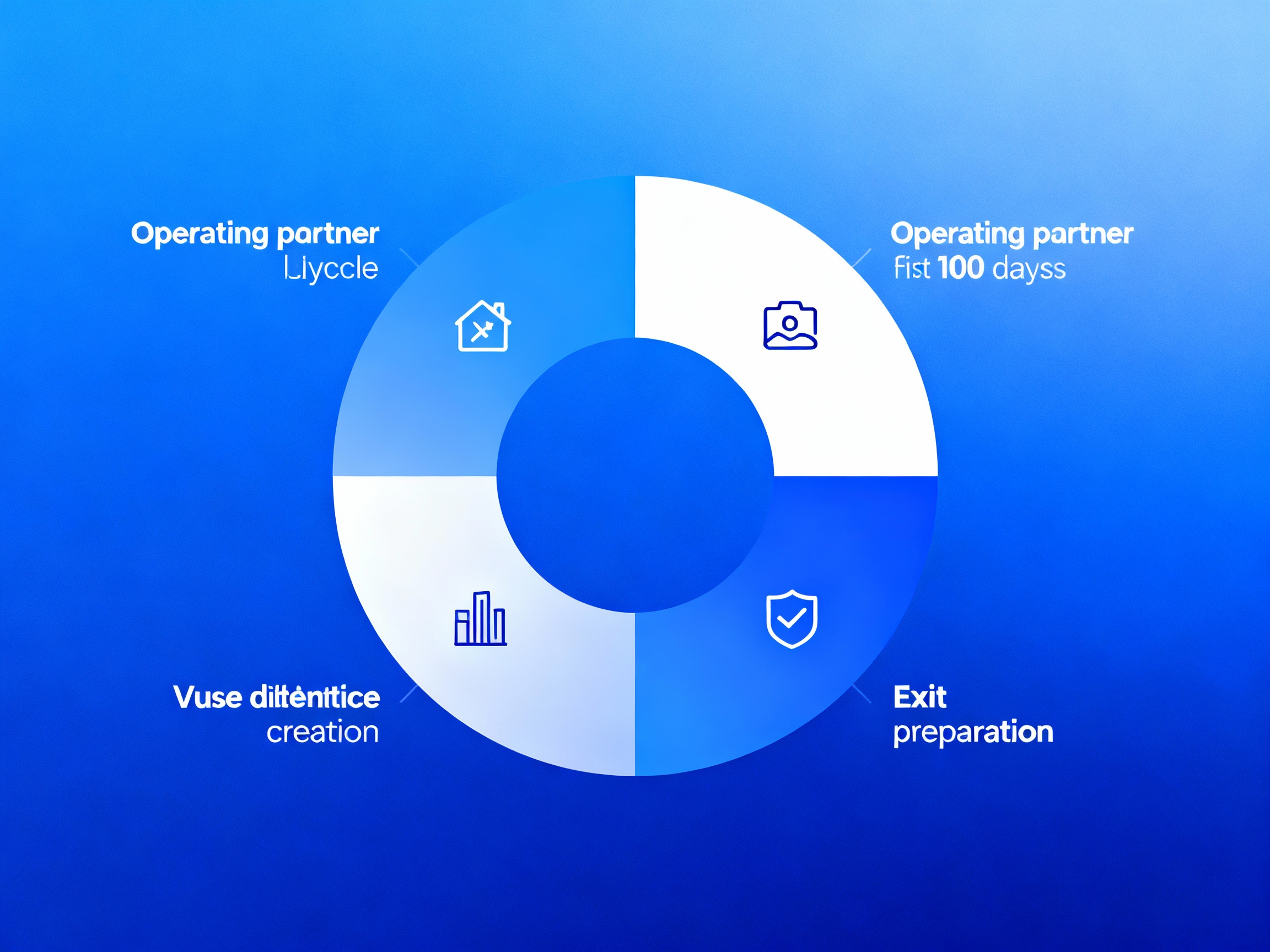
The modern operating partner role spans the entire investment lifecycle:
Pre-Deal (Due Diligence)
- Assess operational improvement potential
- Identify leadership gaps and talent risks
- Validate value creation hypotheses
- Model operational transformation costs and timelines
First 100 Days
- Lead rapid diagnostic assessments
- Establish KPI frameworks and reporting cadences
- Initiate quick-win operational improvements
- Support CEO and leadership team transitions
Value Creation Phase
- Drive strategic initiatives across the portfolio
- Implement best practices from one portfolio company to others
- Support digital transformation and AI adoption
- Build functional capabilities (sales, operations, finance)
Exit Preparation
- Position companies for optimal exit narratives
- Address operational issues that could affect valuation
- Support management presentations to buyers
- Ensure leadership continuity through transition
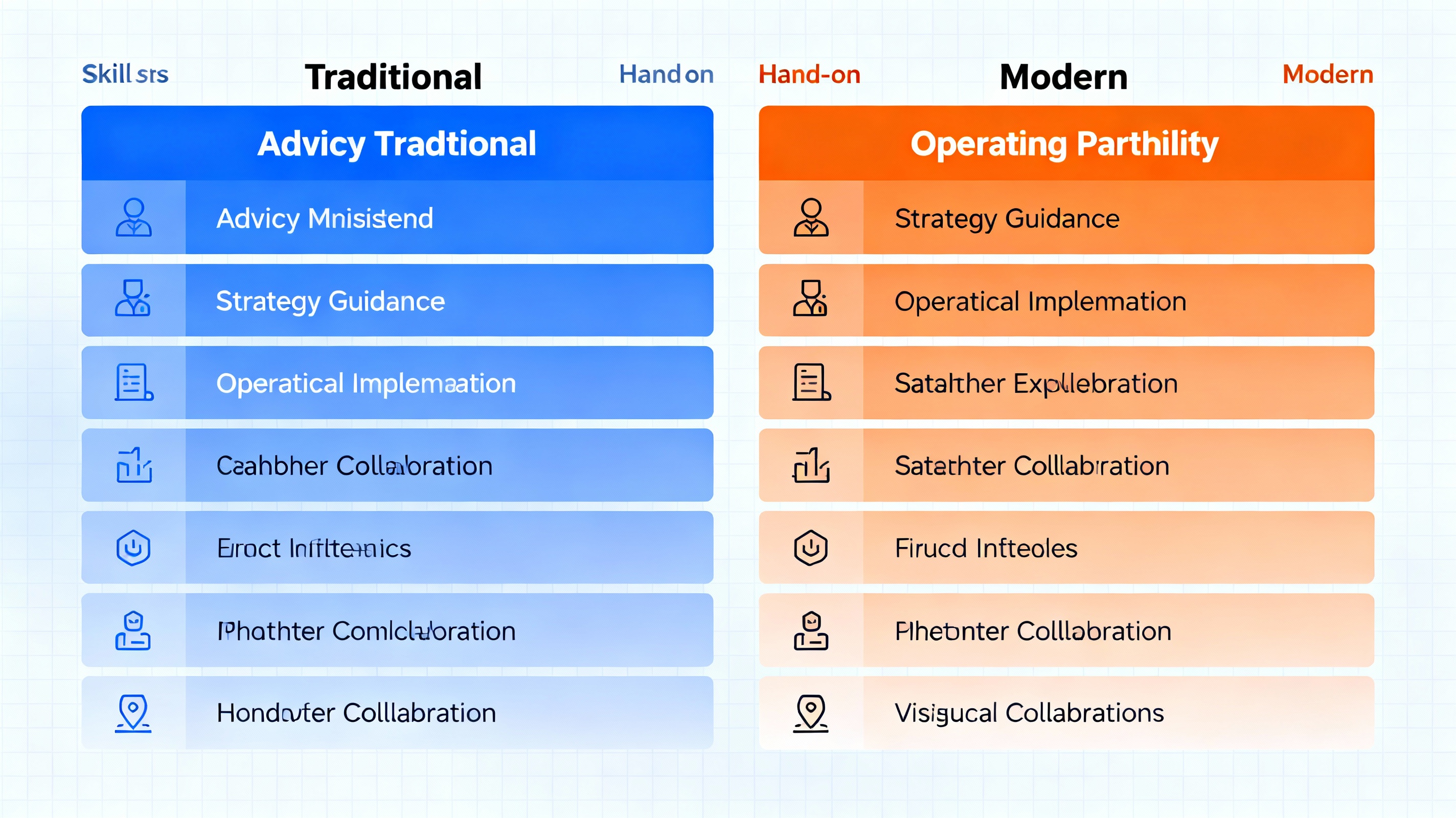
The Talent Profile Has Evolved
The operating partners PE firms seek today look different from a decade ago:
Traditional Profile:
- Former CEO or divisional president
- Industry expertise in specific sectors
- Track record of P&L management
- Advisory mindset
Emerging Profile:
- Transformation and turnaround experience
- Cross-functional operational expertise
- AI and digital fluency
- Hands-on execution capability
- Comfort with multiple concurrent engagements
PE firms are aggressively recruiting operating talent with proven experience in leveraging artificial intelligence and data analytics to drive margin growth and operational efficiency. Technical fluency has become table stakes.
The Compensation Structure
Operating partner compensation reflects the role's strategic importance:
Base Compensation: Typically ranges from $400K-$800K at major PE firms, with mid-market firms often in the $300K-$500K range.
Carried Interest: Most operating partners participate in fund carry, though at lower percentages than deal partners. This alignment ensures focus on long-term value creation, not just short-term improvements.
Co-Investment Rights: Many firms offer operating partners the opportunity to co-invest in deals they support, creating additional upside potential.
Portfolio Company Equity: Some operating partners receive direct equity stakes in portfolio companies where they take active operational roles.
The challenge: extended holding periods—now averaging 6.4 years—mean traditional incentive structures may not align with likely exit timing. Firms are redesigning compensation to retain operating talent through the full investment lifecycle.
The Work Model Challenge
Operating partner roles present unique work-life considerations:
Travel Intensity: Five days in-person spread across the firm's headquarters and portfolio companies isn't uncommon. With portfolio companies often geographically dispersed, operating partners face substantial travel requirements.
Multiple Simultaneous Engagements: Unlike corporate executives who focus on a single company, operating partners typically support 4-8 portfolio companies simultaneously, requiring exceptional context-switching and time management.
Urgency Without Authority: Operating partners must drive change through influence rather than direct authority, navigating complex stakeholder dynamics between PE sponsors, portfolio company boards, and management teams.
Episodic Intensity: Value creation often requires periods of intensive involvement—leadership transitions, strategic pivots, crisis management—followed by periods of lighter engagement.
Building an Operating Partner Practice
For PE firms investing in operational capability, several models have emerged:
In-House Team
Building dedicated operating partner teams provides:
- Consistent methodology across portfolio
- Deep institutional knowledge
- Alignment with firm culture and strategy
- Career path for developing talent
The tradeoff is fixed cost regardless of deployment and potential skill gaps for specialized situations.
Network Model
Some firms maintain networks of on-call operating executives who deploy as needed:
- Flexibility to match expertise to specific situations
- Variable cost structure
- Access to specialized industry or functional expertise
- Fresh perspectives from outside the firm
The tradeoff is less consistency and potential availability constraints.
Hybrid Approach
Most sophisticated firms combine core in-house operating partners with specialized network relationships, optimizing for both consistency and flexibility.
The Interim Leadership Connection
The demand for interim leaders has risen significantly since 2020, and operating partners increasingly serve as the bridge. When portfolio companies face leadership gaps—planned or unexpected—operating partners can:
- Step into interim CEO or functional leadership roles
- Stabilize operations while permanent search proceeds
- Assess internal candidates through direct observation
- Ensure continuity of value creation initiatives
This interim capability has become a competitive advantage for PE firms, reducing the risk and cost of leadership transitions.
The Path Forward
As PE firms face extended hold periods and pressure to generate operational returns, the operating partner role will only grow in importance. Q3 2025 saw increased senior leadership hires and promotions across Operating Partners, alongside CFOs and HR/TA leaders.
For executives considering operating partner careers, the opportunity is significant: strategic impact, equity upside, and variety across multiple companies and situations. The tradeoffs—travel intensity, multiple stakeholder navigation, and influence-based leadership—aren't for everyone, but for those who thrive in dynamic environments, it's among the most rewarding roles in the PE ecosystem.
For PE firms, the message is clear: operational expertise is no longer optional. The firms that build world-class operating partner capabilities will be best positioned to generate returns in a market where financial engineering alone falls short.
---
Building your operating partner team? [Contact GracePeak](/contact) to discuss how we help PE firms recruit operational leaders who drive measurable value creation.