
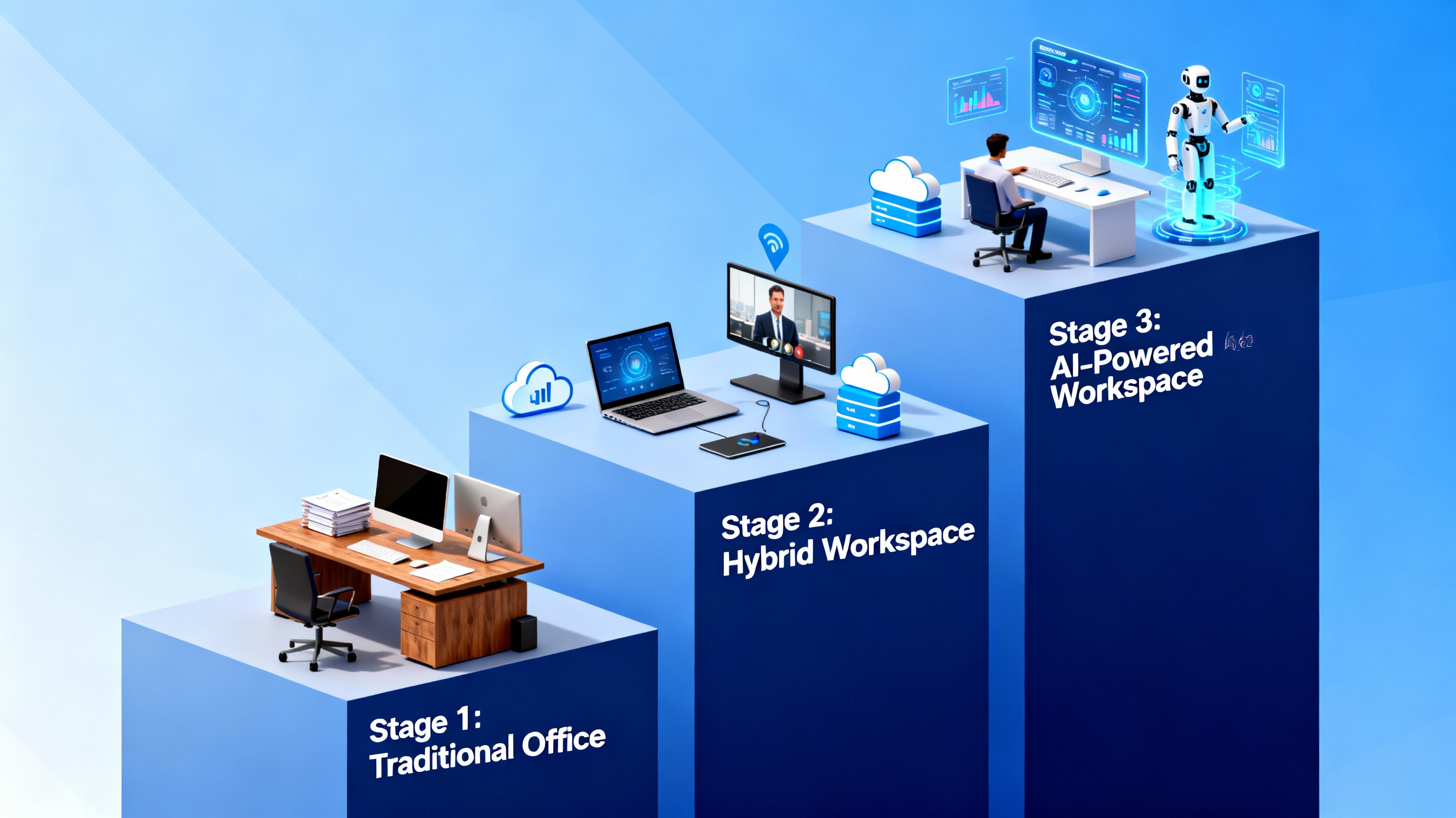
The executive search industry is splitting into two camps.
On one side: firms aggressively adopting AI, reducing 30-40% of recruiter workload and fundamentally reimagining their operating models. On the other: firms treating AI as a minor efficiency tool while preserving traditional approaches.
This divergence will determine which firms thrive—and which become obsolete. For clients evaluating search partners and for firms navigating transformation, understanding the AI adoption spectrum is essential.

The AI Adoption Spectrum
Search firms fall along a maturity curve in AI implementation:
Level 1: AI-Curious (Experimental)
These firms dabble with AI tools—perhaps using ChatGPT for email drafting or basic LinkedIn automation. AI is a productivity enhancement for individual recruiters, not a strategic capability. Impact on client outcomes: minimal.
Level 2: AI-Enhanced (Process Optimization)
Firms at this level have integrated AI into specific workflows: candidate sourcing, market mapping, or CRM maintenance. They've realized measurable efficiency gains but haven't fundamentally changed their business model. Fees and timelines remain largely traditional.
Level 3: AI-Native (Model Transformation)
These firms have rebuilt their operating models around AI capabilities. Like NU Advisory Partners, they use technology to automate executive search processes while enabling consultants to focus on high-value activities. Pricing, timelines, and client experiences all reflect AI-enabled efficiency.
Level 4: AI-First (New Entrants)
Pure-play AI platforms like SucceedSmart and ExactSearch.AI represent the furthest end of the spectrum. Built from the ground up on AI architecture, they offer dramatically different economics and experiences—but may lack the relationship depth of established firms.
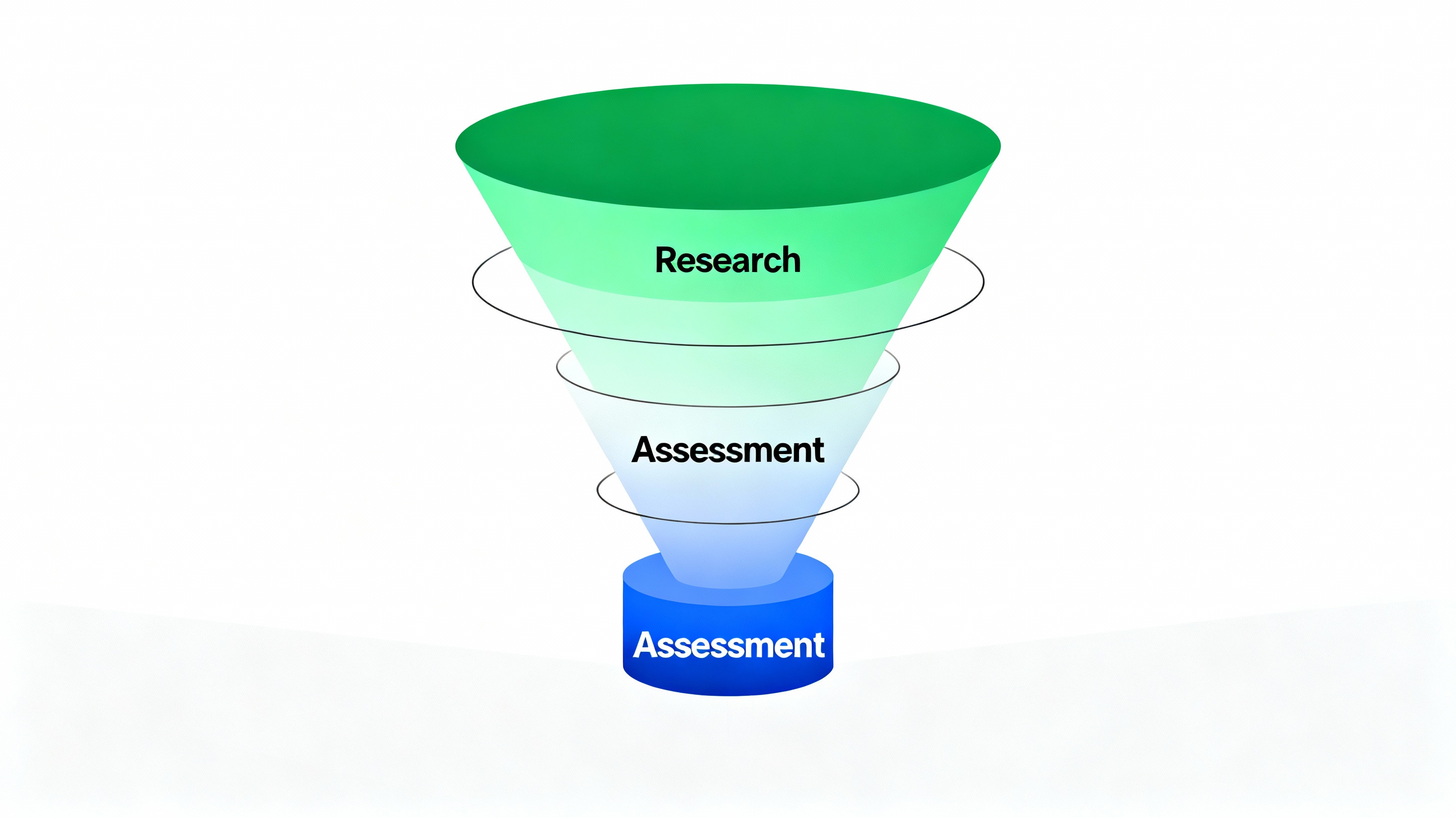
What AI Actually Automates
Understanding AI's practical applications helps evaluate firm capabilities:
Research and Sourcing (High Automation Potential)
- Candidate identification across databases and platforms
- Competitive landscape mapping
- Background research synthesis
- Profile matching against specifications
AI excels here because these tasks involve processing large volumes of structured data against defined criteria. What once took analysts weeks can now happen in hours.
Outreach and Engagement (Medium Automation Potential)
- Initial candidate contact
- Follow-up sequencing
- Interview scheduling
- Status updates and coordination
AI can handle routine communications effectively, but high-value candidates often require personalized approaches that automated outreach cannot match.
Assessment and Selection (Low Automation Potential)
- Cultural fit evaluation
- Leadership presence assessment
- Reference interpretation
- Client-candidate matching
These activities require human judgment, emotional intelligence, and contextual understanding that AI cannot replicate. They remain the domain of experienced consultants.
Implementation Challenges
Firms attempting AI transformation face real obstacles:
Data Quality Issues
AI systems are only as good as their training data. Firms with poorly maintained candidate databases or inconsistent data entry practices struggle to realize AI's potential.
Consultant Resistance
Experienced recruiters may view AI as a threat to their value. Successful implementation requires demonstrating that AI enhances rather than replaces human expertise.
Integration Complexity
Bolting AI capabilities onto legacy technology stacks is difficult. Many firms face years of technical debt that impedes modern tool adoption.
Client Education
Clients accustomed to traditional retained search may be skeptical of AI-enabled approaches. Firms must articulate how AI improves outcomes, not just reduces costs.
What Leading Firms Are Doing Right
The most successful AI adopters share common practices:
Starting with High-Volume Activities
Rather than attempting wholesale transformation, leaders begin with high-volume, low-complexity tasks: research automation, database maintenance, initial screening. Success builds momentum and capability.
Preserving Human Touchpoints
The best implementations keep humans in the loop for relationship-critical activities. AI handles research; consultants handle relationships. This hybrid model captures efficiency benefits while preserving what clients value most.
Investing in Data Infrastructure
AI capabilities require clean, structured data. Leading firms invest in CRM modernization, data governance, and integration architecture before deploying advanced AI tools.
Measuring Outcomes, Not Activity
Traditional metrics—calls made, candidates contacted—become less relevant in AI-enabled models. Leaders focus on outcome metrics: time-to-shortlist, candidate quality, client satisfaction.
Implications for Clients
When evaluating search partners, consider:
Ask About AI Capabilities
Request specific examples of how the firm uses AI. Vague claims about "leveraging technology" are insufficient. Ask: What activities are automated? What efficiency gains have you realized? How do you balance AI with human judgment?
Evaluate Timeline Implications
AI-enabled firms should deliver faster results. If a firm claims AI capabilities but quotes traditional 8-12 week timelines, something doesn't align.
Consider Transparency
The best AI-enabled firms are transparent about their technology and process. They can explain exactly how AI contributes to their methodology.
Balance Speed and Relationship
For critical searches, relationship access may matter more than AI efficiency. Match your search partner selection to the specific requirements of each engagement.
GracePeak has invested significantly in AI-enabled research and sourcing while preserving the experienced consultant relationships that critical searches require. Our hybrid approach delivers faster results without sacrificing the human judgment and relationship access that high-stakes hiring demands.
The Path Forward
AI transformation in executive search is no longer optional. Firms that fail to adopt will face cost and speed disadvantages that erode competitive position over time.
But transformation isn't simply about implementing tools—it's about rethinking operating models, developing new capabilities, and delivering client value in new ways. The firms that get this right will define the industry's next chapter. Those that don't will become its history.
---
Want to understand how AI-enabled search can accelerate your executive hiring? [Contact GracePeak](/contact) to discuss our technology-enhanced approach.